Palomares: Reflections of an American, sixty years later
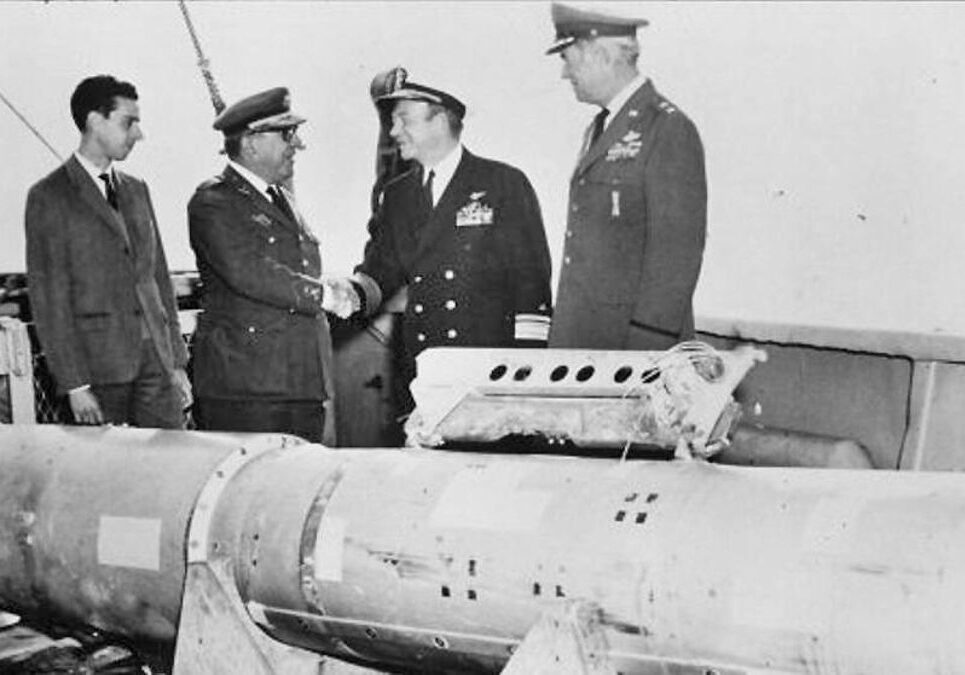
[U.S. Navy photo]
Dr. Michael E. Ketterer, Professor Emeritus of Chemistry and Biochemistry at Northern Arizona University in Flagstaff, AZ, has authored “Palomares: Reflections of an American, sixty years later.” See his English language version here.
An Andalusian Spanish version has been edited and published by elDiario.es in Spain.
As Dr. Ketterer’s English language version begins:
“Before dawn on January 17, 1966, the six-year-old author was asleep in the Buffalo, New York suburb of North Tonawanda. Simultaneously, two US planes collided over the Iberian Peninsula during a mid-air refueling operation between a B-52 bomber and a KC-135 tanker. The B-52 was completing one of the US Air Force’s Strategic Air Command’s daily armed surveillance routes. In a matter of seconds, three thermonuclear bombs fell to the land, and a fourth fell into water, near Palomares, a village located about two kilometers west of the Mediterranean, in Almeria, Andalucía, Spain.
All of that happened, before I got vertical that day.
Two bombs were destroyed upon impact, although neither produced a nuclear explosion. Instead, several kg of plutonium (Pu) dusted the tomato fields and residences of Palomares on a windy day. A local resident found another bomb, largely intact with its opened parachute. However, the last bomb was somewhere deep in the Mediterranean, instantly redirecting the Air Force’s top priority into using all resources available on the critical mission: find the lost bomb before the Soviets can do so. The successful recovery became the narrative of Palomares, amplified by the two nations and in the world press. Today, photos of the recovered bomb onboard the USS Petrel [see above] are some of the most common Internet images of Palomares…”.
Dr. Ketterer’s essay goes on to describe the events of January 17, 1966 and its aftermath as “an enormous tragedy” that few to none knew about or remembered, due to “[i]norance and social amnesia.”
He explains:
“Palomares is an example of the Cold War’s nuclear mythology. In truth, Palomares is akin to a sandbox full of plutonium, it never was properly cleaned up, and the large majority of the Pu remains in Almerian soils. The Pu shall remain there, with its accompanying mythology, until we write the true history, and demand better from those responsible among both countries.”
Given that significant amounts of hazardous plutonium contamination remained and remains in and around Palomares, Dr. Ketterer asks “Why shouldn’t Palomares be included in the next RECA [Radiation Exposure Compensation Act]?”
Having noted that the plutonium contaminating Palomares passed through the still severely contaminated Rocky Flats, Colorado plutonium pit production factory site, Dr. Ketterer’s essay concludes:
“The USA is obligated to assist all those affected by the 1966 disaster in both hemispheres. The next RECA must include Palomares, as that represents justice, atonement, and a long-overdue apology to our neighbors in Spain.”
Support Beyond Nuclear
Help to ensure a safer, greener and more just world for all