News
Anti-nuclear contingents march for climate

A “Nuclear-Free, Carbon-Free” bloc marched in a major climate protest on the eve of the United Nations General Assembly, last Sunday in New York City. Taking their name from the title of Dr. Arjun Makhijani of IEER’s 2007 book, Carbon-Free and Nuclear-Free: A Roadmap for U.S. Energy Policy, this is at least their third climate…
Read MoreGroups Demand DOE EIS Before Agency Bails Out Palisades Zombie Reactor Restart

NEWS FROM BEYOND NUCLEAR For immediate releaseContact: Terry Lodge, environmental coalition co-counsel, (419) 205-7084, [email protected] Michael Keegan, Co-Chair, Don’t Waste Michigan, (734) 770-1441, [email protected] Kevin Kamps, radioactive waste specialist, Beyond Nuclear, (240) 462-3216, [email protected] Environmental Coalition Demands DOE Prepare EIS before Bailing Out Palisades for Unprecedented Restart NEPA Requires “Major Federal Project” Hard Look, Groups…
Read MoreSLOMFP/FOE challenge Diablo Canyon embrittlement
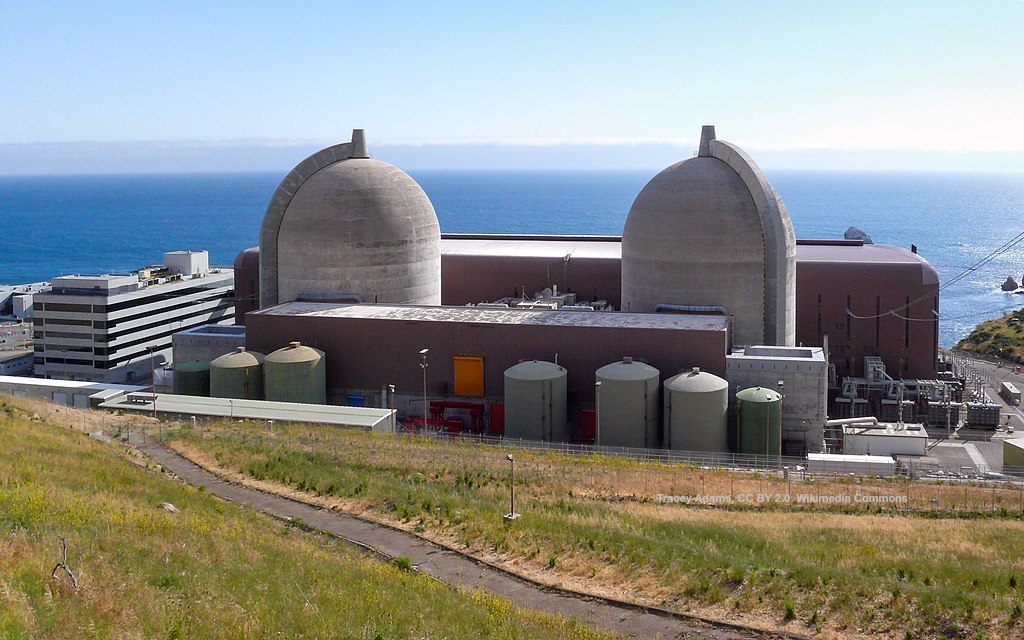
On September 14, 2023, Diane Curran and Hallie Templeton, legal counsel for San Luis Obispo Mothers for Peace (SLOMFP) and Friends of the Earth (FoE), respectively, submitted an emergency shutdown petition with the U.S. Nuclear Regulatory Commission (NRC) Commissioners regarding Diablo Canyon Unit 1 in California (pictured alongside Unit 2, overlooking the Pacific Ocean, above).…
Read MoreNM AG Opposes Holtec CISF
On Friday, September 8, 2023, New Mexico Attorney General Raul Torrez filed an Amicus Brief, arguing against the Holtec International license granted by the U.S. Nuclear Regulatory Commission. The Friend of the Court Brief is in support of Beyond Nuclear and others’ legal challenges to the NRC license in federal appeals currently before the U.S.…
Read MorePress Statement re: Palisades zombie reactor restart
NEWS FROM BEYOND NUCLEAR For immediate release Contact: Kevin Kamps, radioactive waste specialist, Beyond Nuclear, [email protected], (240) 462-3216 Wolverine and Hoosier Rural Electric Co-Ops’ Power Purchase Agreement with Holtec for Palisades’ Electricity a ‘Pig in a Poke,’ Says Critic Reliability, Affordability, and Even Safety Put at Extreme Risk by Zombie Atomic Reactor Restart Scheme COVERT…
Read MoreRadiation persists in wild boars

Some radionuclides persist in the environment once released, contaminating the food chain, creating widespread long-term risk of radiation exposure. Radiocesium, which has been released from civilian reactor meltdowns like Chornobyl and Fukushima, but also from worldwide atomic testing, is one such radionuclide. New research demonstrates that wild boars in Bavaria are not only contaminated by…
Read MoreIL Letter to Editor speaks to all 50 states

Based in Chicago, IL David Kraft, Director of Nuclear Energy Information Service (NEIS), succinctly writes in his Chicago Sun Times Letter to the Editor (LTE) a warning that presently applies to dozens of state legislatures across the country who are parroting and rebranding the same repeated lies and a dangerous failed energy policy of atomic…
Read MoreGolden Rule-related events in s.w. MI, Sept. 7-13

Please see the event updates below (time-stamped 9pm ET, Friday, Sept. 8, 2023). Please note that all open boat tours in St. Joe, MI have been cancelled. However, all remaining events, to be held in Kalamazoo, will go ahead as previously planned, from Sat., Sept. 9 till Tues., Sept. 12. Hope you can come to…
Read MoreTritium releases opposed as environmental and health concerns grow
Reactor community residents, state and federal political officials, public health experts, fishing industry advocates and environmentalists in the United States and countries around the world are calling for stricter protective action to prevent the international nuclear industry’s global discharge of its largest, and costliest, volume of liquid radioactive waste from nuclear power sites; tritium, radioactive…
Read MoreMarine expert disses dumping
According to marine expert Ken Buesseler, senior scientist at Woods Hole Oceanographic Institution, Japan and TEPCO have “been only partially successful and only partially transparent” as they begin dumping some 350 million gallons of radioactive water into the Pacific Ocean. The water was contaminated by direct contact with the melted radioactive cores of the ruined…
Read More