New Don’t Bank on the Bomb
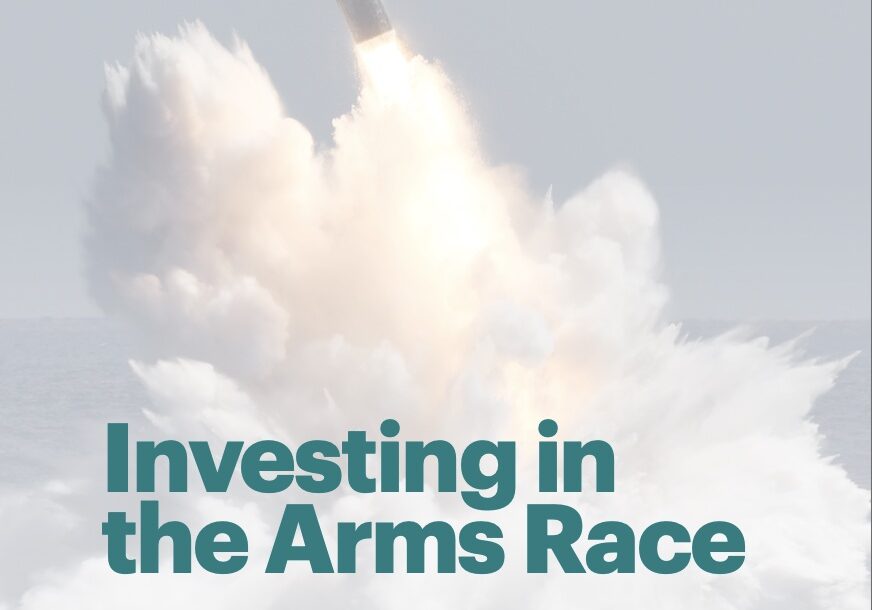
The new edition of Don’t Bank on the Bomb is out, with more dire news
The new Don’t Bank on the Bomb report is out, and the headline is stark: 301 financial institutions have significant financial ties to the nuclear weapons industry between January 2023 and September 2025. For the first time in years, the number of investors has grown.
41 more investors are now seeking to profit from global rearmament.
Major defense contractors are profiting extensively from record levels of military spending. And investors who should know better are following the money. There has also been a coordinated push by arms producers and government officials, including former NATO leadership, to increase private sector investments in weapons companies. In some cases they are even pressuring investors to drop their ethical and sustainability restrictions on defence investments, which are often aimed at preventing exposure to nuclear weapons.
The report tracks $709 billion held in shares and bonds, and $300 billion in loans and underwriting, flowing to 25 companies involved in the nuclear programmes of China, France, India, the United Kingdom and the United States.
As geopolitical pressure mounts, our message has to be clear: nuclear weapons have not become more acceptable because the political climate has shifted. If anything, rising nuclear risk demands stricter action, not weaker standards.
Key points in the report are:
- Rising pressures, risky direction: Governments and the defense industry are pushing investors into weapons prompting some financial institutions to weaken or drop long-standing exclusions on nuclear arms.
- Profiting from arms racing: Increased military spending is a short term response to global tension that reduces resources available for diplomacy and development – long term security. It also puts profits into the hands of an industry that relies on fear. This report reveals who stands to gain financially from the expansion of nuclear weapons.
- Standards shouldn’t bend under stress: Geopolitical tension is exactly when strong policies matter most. International humanitarian law must guide decisions, not be sidelined.
- Nuclear weapons haven’t changed: They remain inherently indiscriminate and unacceptable. Today’s heightened risks make stronger restrictions, like the Treaty on the Prohibition of Nuclear Weapons, more urgent.
Support Beyond Nuclear
Help to ensure a safer, greener and more just world for all