“Deep Fission” launches its mile deep reactor
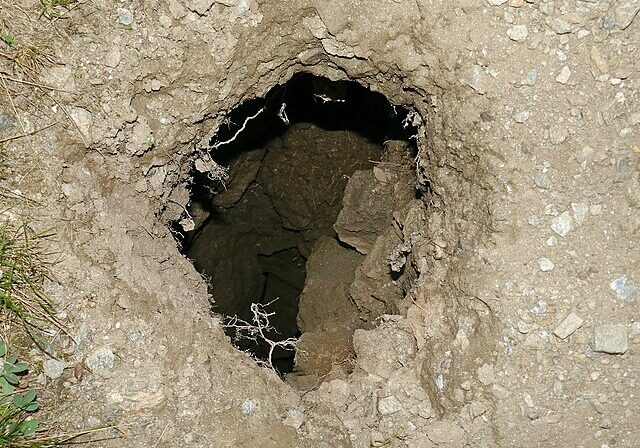
Much to the surprise of residents in the rural community of Parsons, Kansas, on December 4, 2025 they discovered that a Berkeley, California nuclear startup company, Deep Fission, had selected their town for the fledgling company’s nuclear power plant groundbreaking ceremony just a few days later beneath the nearby 6800 acre security gated Great Plains Industrial Park, Labette County.
Deep Fission’s ceremonial announcement is a part of a nationwide launch of President Donald Trump’s White House Executive Order 14301 now under the authorization of the US Department of Energy (DOE) for a mile deep pilot borehole project to sink the first-of-a-kind deep geological nuclear power station underground. Instead of constructing the familiar mammoth and costly reinforced concrete nuclear accident containment structure, these smaller atomic power plants intend to rely upon the natural rock body itself for operational radiation shielding and isolating a potential nuclear accident from contaminating the atmosphere, the surrounding surface area and deep fresh water resources into an indefinite future.
Deep Fission also has a “sister” nuclear startup corporation that is similarly experimenting with using the same fossil fuel fracking technology to drill one mile deep boreholes that would also simultaneously serve as the deep geological permanent disposal site for the high-level radioactive waste generated and contained by these power reactors in the same body of bedrock.
A memorandum of understanding (MOU) signed between the two startups companies (both co-founded by CEO Elizabeth Muller and her inventor father, Rich Muller) promotes the nuclear power operation as a “comprehensive approach” to integrate nuclear technology to both generate atomic powered electricity and permanently dispose of its high-level radioactive waste on the same site.
Together, the Deep Fission/Deep Isolation MOU envisions the reactor’s design, its assembly line construction, installation and commercial operation of 15 megawatt electric (MWe) small modular pressurized water reactors (SMR), identified as the “Gravity Reactor.” The SMRs would supply the high pressure super-heated steam to a turbogenerator facility on the surface co-located with a common control room for multiple units dropped into other individual boreholes. These reactors will not require refueling. Instead, each unit would operate for one fuel cycle (roughly projected for six years) before permanently shutting down, disconnecting the unit within the bore hole from the surface facility and then sealed shut in place deep underground. A new fueled Gravity Reactor would be lowered down the borehole and stacked atop the buried unit, connected to the surface turbogenerator and control room to resume power operations to the surface electrical grid. Deep Fission/Deep Isolation’s long term vision is proposing that multiple units could be sequentially stacked into one hundred individual bore holes could collectively provide 1500 MWe of electricity per site or more as the energy equivalent to the current nuclear industry’s conventional sized pressurized water reactors.
In Beyond Nuclear’s view, there a many questions that need to be addressed and much more analyses that still needs to be conducted.
Given that Deep Fission/Deep Isolation and the DOE are projecting a target date of July 4, 2026 for the pilot reactor’s nuclear criticality, Beyond Nuclear notes with concern that the project has not completed a scientifically validated environmental review or geological survey to “reasonably assure” the suitability of the natural rock body being credited with operational health and safety standards, a reliable nuclear accident containment system and the de facto pilot for the first-of-a-kind permanent deep geological disposal site for high-level radioactive waste (irradiated nuclear fuel rods).
For example, there are many broad uncertainities and potentially impactful consequences now associated with accelerating climate change. What are some climate change projected impacts including the rise and fall of the aquifers and deep water resources cycling under Labette County, Kansas around and downstream of the proposed site?
In Parsons and the surrounding Labette County area, the bedrock is identified to significantly limit the availability and quality of groundwater, because the local geology consists of dense, impervious shale and solid limestone. Also, the area lacks the massive, high-yielding aquifers found in Western Kansas.
Still, questions about what climate change impacts and consequences have been analyzed to date for the proposed deep nuclear power generating facility and long term nuclear waste burial site need to be made public. In fact, what climate change projections to date been factored in and addressed by a Deep Fission/Deep Isolation environmental review and analyzed for their impacts on both the proposed nuclear power generator and the permanent disposal of highly radioactive nuclear waste into the future?
With this first-of-a-kind project now being proposed for an accelerated licensing approval process for a July 4, 2026 reactor criticality, Beyond Nuclear also notes that Deep Fission reactor design safety review is presently still in the pre-application review process before the US Nuclear Regulatory Commission (NRC), Congress’ designated nuclear power and nuclear waste repository licensing agency. Beyond Nuclear further notes that the NRC has not demonstrated any analysis for establishing “reasonable assurance” in the reliability and integrity of substituting the natural geology for the inspectable safety-rated construction of a steel and concrete reactor containment design.
Beyond Nuclear remains concerned and vigilant to the Trump Administration’s efforts to pressure the NRC to abandon rather than strengthen its independent safety oversight and regulatory authority for the sake of fast tracking the nuclear industry expansive and cost cutting agenda over democratic due process.
[Photo: Wikimedia Commons]
Support Beyond Nuclear
Help to ensure a safer, greener and more just world for all