The never-ending legacy of Fukushima
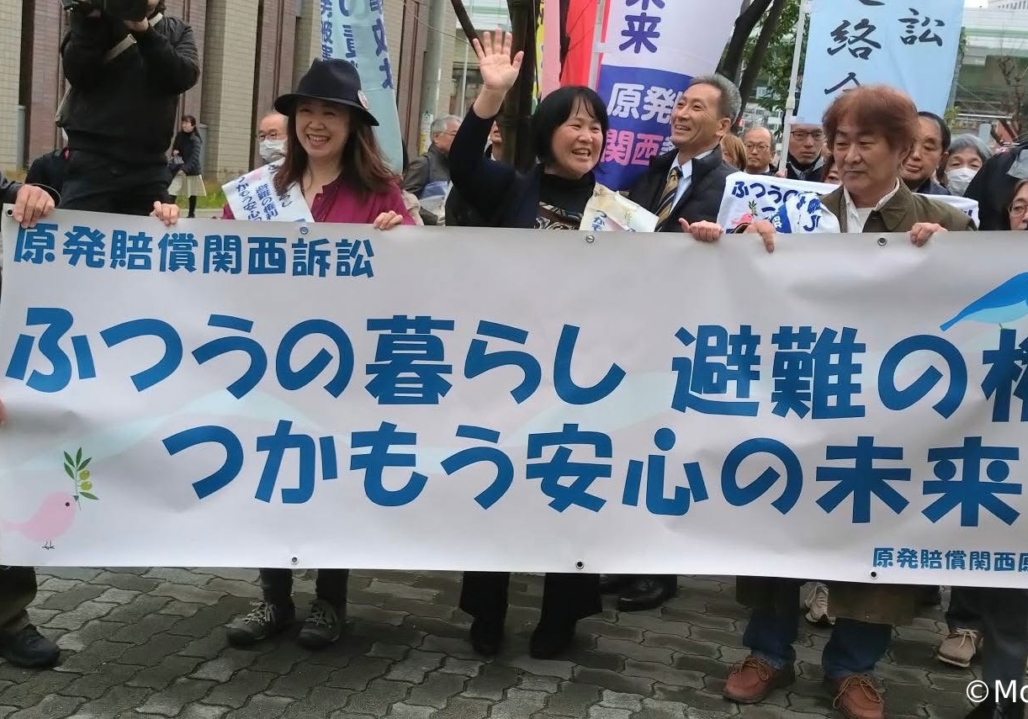
Living free from exposure to radiation: a fundamental human right
A statement by Akiko Morimatsu
In order to avoid exposure to radiation caused by the Fukushima Daiichi nuclear accident which occurred in 2011, I still continue living in Osaka today, as an “internally displaced person*” with my two minor children. Immediately after the accident, we, as ordinary citizens, were not informed about radioactive contamination and thus suffered otherwise avoidable radiation exposure. We had no choice but to live on contaminated soil, breathe contaminated air, and drink contaminated water. I was breastfeeding my five-month-old daughter at the time, and it was only later that I realized I had exposed my children to radiation.
The authorities, who had assured the public that there would never be an accident, relaxed radiation exposure standards after the disaster to suit their own interests. Applying their economic logic, they imposed arbitrary boundaries to decide who would be recognized as a victim, thereby dividing the victims among themselves. However, fifteen years after the accident, many victims continue to suffer from its consequences, regardless of their victim status as determined by administrative zoning. The reason is simple: radioactive contamination remains. And because I do not want my children to be exposed to even one additional micro-sievert of unnecessary radiation, I continue to live as an internally displaced person without compensation.
We believe these fundamental rights of existence being violated: “not to be exposed to radiation” and “to enjoy good health.” Yet the Japanese justice system has endorsed the “safety standards” that the State unilaterally relaxed after the nuclear accident. And since the Supreme Court ruling in 2022, it has become extremely difficult for displaced people to obtain compensation in the civil lawsuits they file. This means that our human right to “avoid unnecessary exposure to radiation” is not respected in the Japanese judicial system.
The nuclear issue is above all a question of fundamental human rights.
Eighty years after the end of World War II, and following the awarding of the 2024 Nobel Peace Prize to Nihon Hidankyō*, and the statements made by hibakusha that have drawn international attention to the issue of radiation exposure, I believe that Japan, drawing on the experiences of Hiroshima, Nagasaki, and Fukushima, must now take a leading role in working to establish a universal fundamental right for all people to be protected from radiation exposure.
Around the world, many people are speaking out against the damage caused by nuclear use – victims of nuclear testing, people exposed to radiation due to uranium mining, and those affected by environmental pollution caused by nuclear waste and contaminated water discharge into the ocean. All of these situations are, in a broad sense, examples of the spread of nuclear damage. Having lived through the Fukushima experience, we know that, whether for military or civil use, no one is safe from becoming a nuclear victim.
By establishing the right to live free from exposure to radiation as a universal human right, it becomes possible to diminish nuclear damage on a global scale.
This is the future we must strive for. That is why we believe it is necessary to build bonds of solidarity with all victims of nuclear use around the world, so that we can work together to establish this universal right.
* According to the United Nations High Commissioner for Refugees, internally displaced people have been forced to flee their homes by conflict, violence, persecution or disasters, however, unlike refugees, they remain within their own country.
** Japan Confederation of A- and H-Bomb Sufferers Organizations, founded in August 1956.
Akiko Morimatsu (pictured at center in the headline photo) is living as an internally displaced person since the accident, representing the group of plaintiffs in the civil lawsuit in Osaka. In 2018, she gave a speech at the United Nations Human Rights Council in Geneva about the lives of internally displaced persons from Fukushima. She is a representative of the plaintiffs’ group of the lawsuits filed by victims of the Fukushima accident in the Osaka metropolitan area.
English translation : Nos Voisins Lointains 3.11
Support Beyond Nuclear
Help to ensure a safer, greener and more just world for all