New cancer study goes where NRC refused
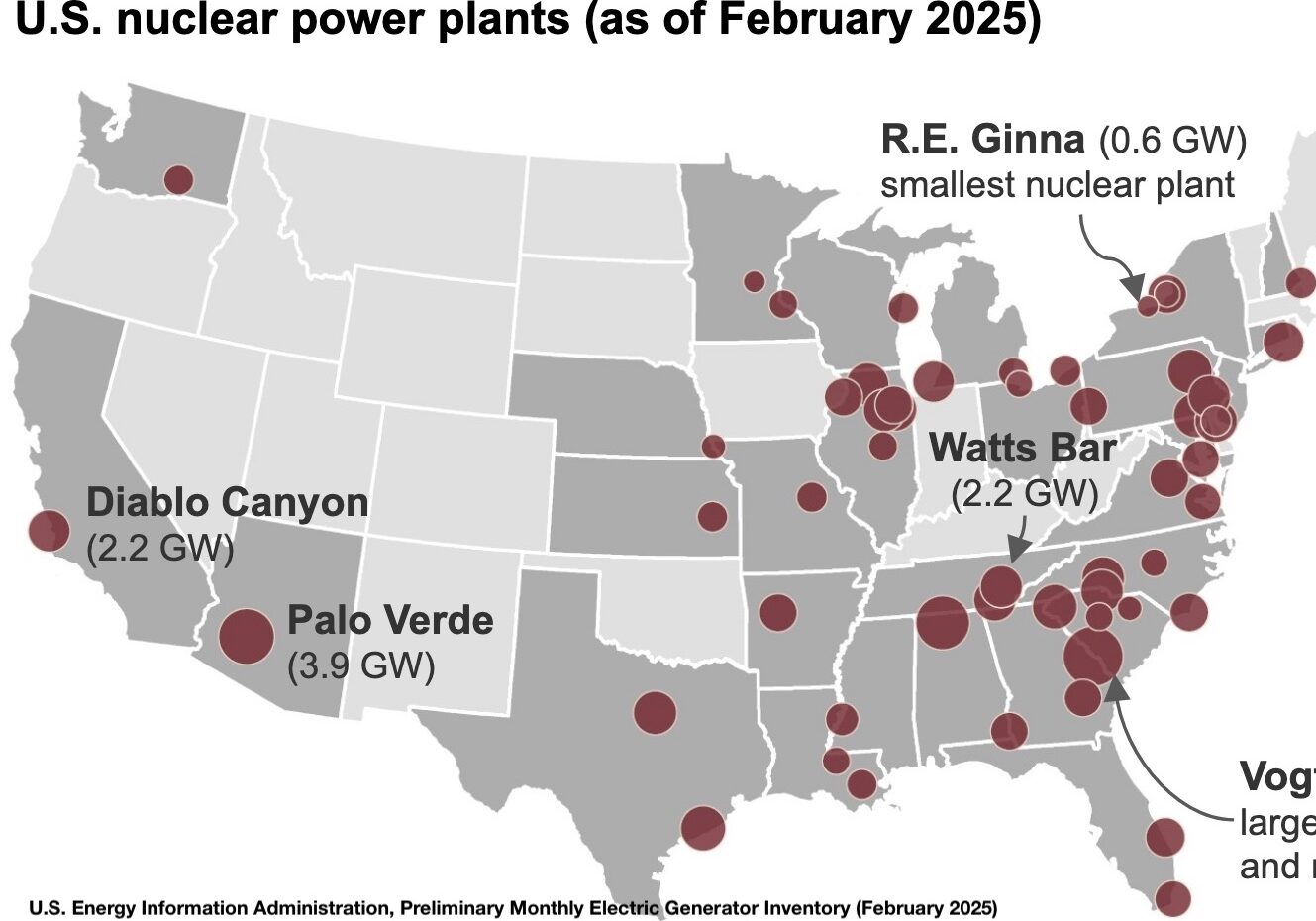
Shows increase in cancer deaths near reactors
The Lost Opportunity: NRC’s Canceled Study
In the early 2010s, the U.S. Nuclear Regulatory Commission (NRC) tasked the National Academy of Sciences (NAS) with conducting a groundbreaking study on childhood cancer risks near nuclear facilities. This study was designed to address shortcomings in the NRC’s existing 1990 health assessment, which relied on outdated assumptions and limited methodologies. The NAS planned to use advanced designs similar to those in France and Germany—where elevated childhood leukemia rates were found near nuclear reactors—and to incorporate transparent protocols, public input, and independent pollutant data.
Yet, in 2015, the NRC abruptly canceled the study, citing cost and time concerns. Internal emails later revealed that staff had already presupposed the outcome, claiming “all the evidence shows you’re not going to find anything,” before data was even collected. This decision effectively shut down what could have been the first nationwide U.S. analysis of radiation exposure and childhood cancer. Pregnancies and children are the most susceptible to serious damage from radiation exposure, underscoring the urgency of such research.
The Harvard Study: Filling in some gaps
Fast forward to 2026, researchers at Harvard T.H. Chan School of Public Health published the first national study in decades examining cancer mortality in relation to nuclear reactor proximity. Covering all U.S. counties from 2000–2018, the study found that counties closer to operational nuclear reactors had higher cancer death rates, particularly among older adults. Importantly, the analysis controlled for socioeconomic and lifestyle factors, strengthening the association.
While the study did not establish causality, its findings highlight a consistent spatial pattern of elevated cancer risk near nuclear facilities.
This study partially fills the void left by the NRC’s canceled NAS project. However, it focused on adult cancer mortality rather than childhood cancers—the very population most vulnerable to radiation exposure. Since pregnancy and childhood are known to be more susceptible to radiation damage, this study indicates even greater damage for these life stages. So while the opportunity to study childhood leukemia a decade ago was lost, this study portends that additional damage will be imposed on the public by exposure to more radioactive pollution.
The Policy Shift: Trump’s Executive Order and radiation standards
In 2025, President Trump issued Executive Order 14300, which reoriented the NRC’s mission from safety regulator to industry enabler. The order called for reconsideration of the Linear No Threshold (LNT) model, the global standard for radiation protection that assumes:
Linear risk – cancer risk rises proportionally with dose.
No threshold – no dose is entirely safe.
By undermining LNT, the EO opens the door to higher allowable exposures and weaker safety standards. This is particularly alarming given that even small doses of radiation can double the risk of childhood leukemia and disproportionately harm women, pregnancies, and children.
Implications for Health and Environment
Scientific Integrity: Canceling the NAS study and the proposal to weaken LNT standards both reflect a troubling trend—policy decisions made to protect industry rather than public health.
Females and Susceptible Life Stages: Females, pregnant women, fetuses, and children face heightened risks from radiation exposure, yet U.S. research fails to focus properly on assessing these impacts.
Long-Term Burden: The Harvard study shows thousands of excess cancer deaths annually linked to nuclear reactor proximity. If exposure standards are loosened, science indicates this burden will likely grow.
Environmental Justice: Communities near uranium mines, reactors, and waste sites already bear disproportionate exposure risks. Weakening protections codifies their suffering as the “cost” of nuclear expansion.
Recommendations
Revive Independent Research ensuring transparency and public participation: Fund studies on childhood cancer risks near ALL nuclear facilities, and studies examining female susceptibility to radiation damage.
Maintain LNT Standards: The NRC should again reaffirm (as it did in 2021) the Linear No Threshold model as the foundation of radiation protection, recognizing that no dose is entirely safe.
Strengthen Monitoring: Incorporate biological monitoring (e.g., fetal tissue impacts, spike releases) into NRC oversight to capture real-world health outcomes.
Prioritize Susceptible Life Cycles: Radiation standards must account for heightened risks to women, children, and pregnancies, moving beyond reliance on the “reference man.”
Reject Nuclear Energy: Policymakers should abandon nuclear power technology for renewable alternatives, considering both climate benefits and long-term health impacts.
We are facing a dangerous trajectory. The U.S. missed a critical opportunity to investigate childhood cancer risks with scientific rigor. Now, even as new evidence points to elevated cancer mortality near nuclear plants, regulatory policy is shifting toward greater exposure allowances.
This combination of lost science and weakened regulation threatens to entrench health risks for generations. As NAS researcher Ourania Kosti noted, “It is important to update the findings of the 1990 study using better methodologies and information.” The Harvard study underscores that urgency. Without independent, transparent research, and strong radiation protections, the U.S. risks prioritizing nuclear industry expansion over the already-burdened health of its current and future generations.
Support Beyond Nuclear
Help to ensure a safer, greener and more just world for all