Deep Fission to get Deep Environmental review?
Mixing the words “exemptions, exclusions” and “nuclear safety regulations” sends a dire warning.
On May 23, 2025, President Donald Trump signed four Executive Orders relating to sweeping federal policy changes that fast-track new US nuclear power commercial development and deployment nationally and globally. This included the signing of White House Executive Order 14299 “Deploying Advanced Nuclear Reactor Technologies for National Security.”
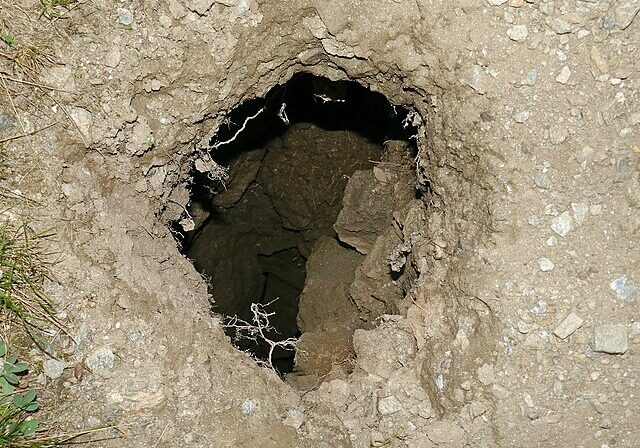
The nationwide effort includes taking a significant number of shortcuts to quickly start-up the First-Of-A-Kind (FOAK) Deep Fission Gravity (15 megawatt electric) microreactor in a mile deep borehole under Parsons, KS aimed at the commercial power project achieving nuclear criticality by July 4th, 2026. These shortcuts would bypass “taking a hard look,” otherwise required under federal environmental laws, at the Deep Fission microreactor and the Parsons area’s natural rock body, hydrogeology and other environment factors theoretically being credited as the reactor(s) severe nuclear accident containment system as well as siting a permanent geological burial ground for all the high-level nuclear waste (irradiated nuclear fuel) to be generated onsite (and potentially transported) practically into the forever future.
On August 12, 2025, Deep Fission announced that it was selected by the U.S. Department of Energy (DOE) as one of eleven “advanced reactors” designs in President Trump’s “Nuclear Reactor Pilot Program.” [1]
The White House order makes Deep Fission/Deep Isolation eligible for “categorical exclusions” or broad exemptions from performing environmental reviews as otherwise federally required by the National Environmental Policy Act (NEPA) and the Administrative Procedures Act (APA) to “take a hard look” at the potentially damaging and harmful environmental impacts of new “advanced reactor” technologies going through the federal licensing, construction, operation and long-term nuclear waste disposal site approval process.
On February 2, 2026, the DOE posted a notice in the Federal Register providing “categorical exclusions” to the DOE selection of new reactor designs, “effective immediately,” without any previous public knowledge, comments or involvement. The Federal Register notice designated a public comment period but qualified it as being considered “voluntary.”
NEPA by federal law requires an informed and transparent federal agency decision-making process with meaningful public participation in developing and reviewing the potential environmental impacts of proposed major federal actions and the alternatives. Furthermore, under the Administrative Procedures Act (APA), a federal agency action is unlawful if it is “arbitrary, capricious, an abuse of discretion, or otherwise not in accordance with the law” or “without observance of procedure required by law.”
Twelve Offices of Attorneys General from across the country responded to DOE comment period on March 4, 2026:
- The “categorical exclusion” of DOE advanced reactors is in violation of NEPA and APA laws. Eleven state Offices of Attorneys General (AZ, CA, IL, MA, MD, MN, NM, NY, OR, WA, VT) and the District of Columbia filed formal comments to the DOE identifying that the agency’s “categorical exclusion” to exempt its choices of “advanced reactors” from environmental reviews as required by NEPA and the APA is “unlawful and arbitrary and capricious by reaching a predetermined outcome before receiving and reviewing public comments.” [2]
- California Office of Attorney General Rob Bonta’s had this to say about exempting microreactors, small modular reactors and other First-Of-A- Kind “advanced reactors,”
“The words ‘exemption, exclusions’ and ‘nuclear safety regulations’ should never be used together. When it comes to nuclear energy and public safety, there should be more safety regulations and environmental protection, not less,” said Attorney General Bonta.
- The Energy Reorganization Act of 1974 provides that the Nuclear Regulatory Commission (NRC or Commission) has licensing and regulatory authority for commercial nuclear reactors, “production facilities for industrial or commercial purposes” and for reactors operated “for the purpose[s] of demonstrating the suitability for commercial application of such a reactor.” Not the DOE.
The twelve Offices of Attorneys General have now alleged:
- DOE failed to adequately consider the potential environmental impacts of the “advanced nuclear reactors”, like Deep Fission, covered by the categorical exclusion;
- The categorical exclusion is unsupported by data showing that “advanced reactors” like Deep Fission do not have the potential to create significant environmental impacts;
- DOE shifted the environmental review of future “advanced reactors” from a public facing review to a purely internal examination;
- DOE exceeded its statutory authority to regulate “advanced nuclear reactors”.[3]
The environmental review process under NEPA is established in support of transparency and the public’s right to democratically participate in the decision-making process. This includes the protection of residents from the potentially damaging impacts of radiological exposure from nuclear power operations, accidents and the long-term consequences posed by nuclear waste.
***
Foot Notes
[1] Department of Energy Pilot Project, Selections
https://www.energy.gov/ne/us-department-energy-reactor-pilot-program
[2] Comments of the Offices of Attorneys General to the US Department of Energy, March 4, 2026, p.2 of 23,
https://oag.ca.gov/system/files/attachments/press-docs/2026_03_04_FINAL_DOE.CatExCommentLetter.pdf
[3] California Office of Attorney General press release, March 5, 2026,
[Photo credit: Tiia Monto,Wikimedia Commons]
Support Beyond Nuclear
Help to ensure a safer, greener and more just world for all