Nuclear Autopsy for Indian Point Decommissioning?
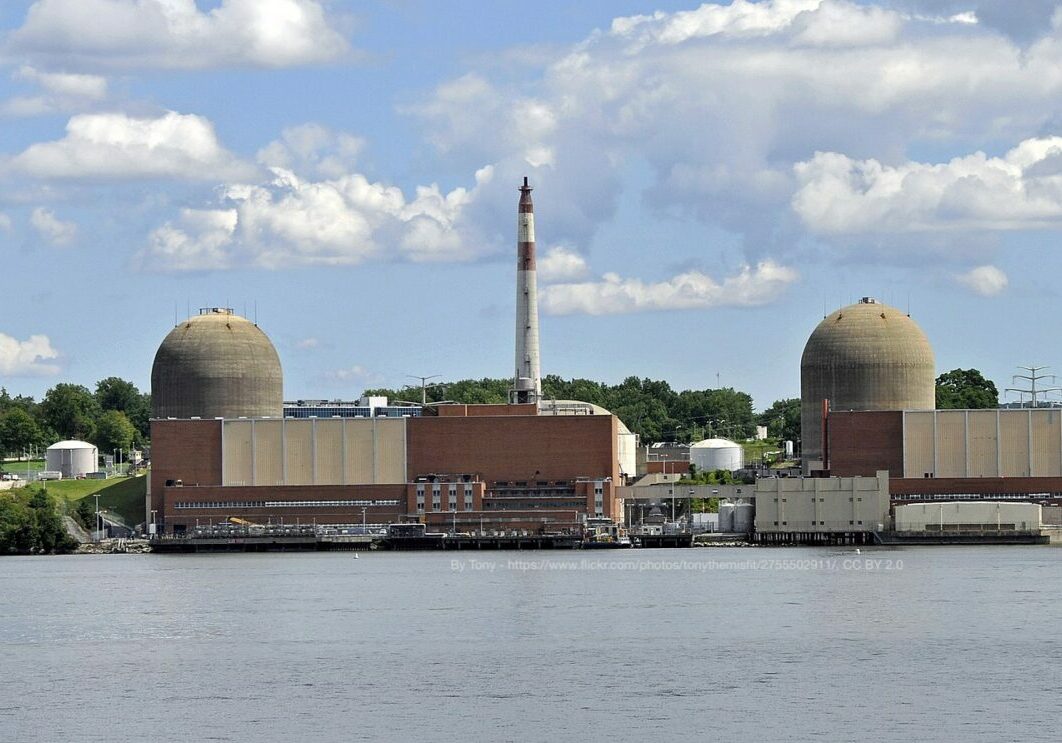
Video of Beyond Nuclear presentation to NY Decommissioning Oversight Board on Indian Point nuclear station
Board broadening Indian Point proceeding to initiate a “nuclear autopsy” to inform relicensing reactor safety
On June 18, 2026, Beyond Nuclear was the guest speaker before the New York State Decommissioning Oversight Board (NYDOB) in a public meeting focused on the decommissioning of the Indian Point nuclear power station entitled, “Mind the Gap: Decommissioning’s Critical Link to Public Safety & Extended Reactor Operations.” The presentation and Q&A session with the state board is video archived and available for viewing on YouTube beginning at time mark < 01:40:08 to 02:24:18 >. Beyond Nuclear is providing links to supporting documentation. Following the presentation, the NYDOB recognized further inquiry into broadening decommissioning’s role at Indian Point is warranted to include the equivalent of an autopsy on the closed reactors’ residual safety margins as an appropriate “cost of doing business” to enhance public safety and reliable operations at other reactors that are seeking to renew operating licenses in New York and beyond.
The Ginna nuclear power station, a Westinghouse Electric Pressurized Water Reactor by design in upstate New York on Lake Ontario, has filed a Subsequent License Renewal Application to the US Nuclear Regulatory Commission (NRC) requesting to extend the 56 year old single unit reactor’s operating license to 60 to 80 years.
The permanently closed Indian Point nuclear station is certified by both the owner Holtec International and the NRC for decommissioning only. Similarly, Holtec International is also certified by the NRC solely as the decommissioning operator of the permanently closed Palisades nuclear station in Covert, Michigan, Combustion Engineering Pressurized Water Reactor. Holtec Internationalis however attempting to “recommission” the Palisades operating license to return to full power. Holtec International has submitted a Letter Of Intent to the NRC that it plans to submit an application to extend its Subsequent License Renewal (60 to 80 years) if it does restart.
Beyond Nuclear presented the State of New York Department of Public Service’s NYDOB with the idea that the decommissioning of the Indian Point nuclear power station in Buchanan, NY is a critically important opportunity. Indian Point is not merely just decommissioning project for dismantlement and site remediation of the three-unit nuclear power station. It is also the opportunity to conduct a scientifically rich strategic “autopsy” of the nearly 50-year old commercial reactor site during the dismantlement and site remediation process. Rather than the decommissioning operator, Holtec International, developing the “custody of care” plan to also haul off the radioactive debris for permanent burial at a distant nuclear waste facility. Beyond Nuclear sees the nuclear waste company, now an aspiring would-be nuclear waste generator, should be directed to develop the “custody of care” to strategically target, harvest and deliver samples of decades old “real world” aged, mapped materials extracted safety-related systems, structures and component to a national laboratory qualified to observe, measure and scientifically analyze the residual safety margins in those material samples taken during the Indian Point decommissioning process.
These aged, extracted samples could then be analyzed and materially evaluated for their residual safety margins after irradiation and embrittlement of the reactors’ base metals, radiation induced cracking in dissimilar beltline weld materials from the reactor pressure vessels. Additional, samples could be cut from reactor internals, concrete core samples from the containment structure and “spent” fuel pools, and sections strategically cut from the original, previously inaccessible 47 and 46 year old electrical cables from Units 2 and 3 as well as other reactor safety-related systems, structures and components. These various harvested materials and their residual safety margins now need to inform a host of identified and unanswered “technical knowledge gaps” for such safety issues as how quick cracks can initiate and grow into the failure of those systems, structures and components in reactors seeking extreme license renewals.
For example, strategic harvesting and the associated laboratory analysis needs to determine the synergy of materially damaging conditions (neutron bombardment, extreme ranges of exposure to heat and rapid cooling, metal fatigue and vibration, extreme pressure, humidity, etc.) is needed to benchmark computer modeling of projected material safety margins remaining in operational nuclear power plants now making application to extend their operating licenses well beyond the original 40 year license at construction, beyond the “initial” 20 year license renewal period for 40 to 60 years and now extending into the first “subsequent” 20 year renewal period from 60 to 80 years of exposure to the harsh operational conditions inside a nuclear power station. The NRC and the nuclear industry are in the planning stages for the second “subsequent” 20 year license renewal period from 80 to 100 years becoming the US nuclear industry’s most apparent “bridge to the future.”
Nuclear autopsies are not a new idea. Harvesting and scientific analysis at the decommissioning stage of permanently closed nuclear power stations has long been recognized by the US Nuclear Regulatory Commission (NRC) and the US Department of Energy’s (DOE) national laboratories for a critical role to provide “reasonable assurance” of the public safety and reliable reactor operations of safety-related systems, structures and components in reactor licensing and relicensing.
The DOE’s Pacific Northwest National Laboratory (PNNL) in the state of Washington was contracted by the NRC Office of Research late in 2015 to publish a Technical Letter Report entitled “Criteria and Planning Guidance for Ex-Plant Harvesting to Support Subsequent License Renewal” (PNNL-27120). Published on December 7, 2017, the PNNL technical letter set out how to identify and mitigate known, but still unresolved “technical knowledge gaps” and make recommendations to effectively resolve and close those “gaps.” PNNL concluded that the targeted extraction of “experiential real world” aged materials from safety-related systems, structures and components permanently closed decommissioning nuclear power stations for laboratory analysis was . The resulting insights into a host of age-related degradation mechanisms to measure and project precise margins to failure will be essential to provide “reasonable assurance” that the materials/components will continue to perform their safety function throughout the subsequent license renewal period for 60 to 80 years.
US regulatory law is now in radical transition by politically-driven pro-nuclear agenda, nuclear industry hype and questionable White House’s decrees for the wholesale rewrite of regulatory law to refocus on “nuclear power benefits.” However, “reasonable assurance” needs to be safe guarded as the evidentiary standard in the NRC’s regulatory process for a legal standard of “adequate protection” established under the Atomic Energy Act for safe and reliable operations under the NRC commercial the reactor licensing and relicensing process.
[Photo credit: Wikimedia Commons, courtesy of Tony Fischer Photography
Support Beyond Nuclear
Help to ensure a safer, greener and more just world for all