NRC’s “Nuclear Rubberstamp Commission” Rule
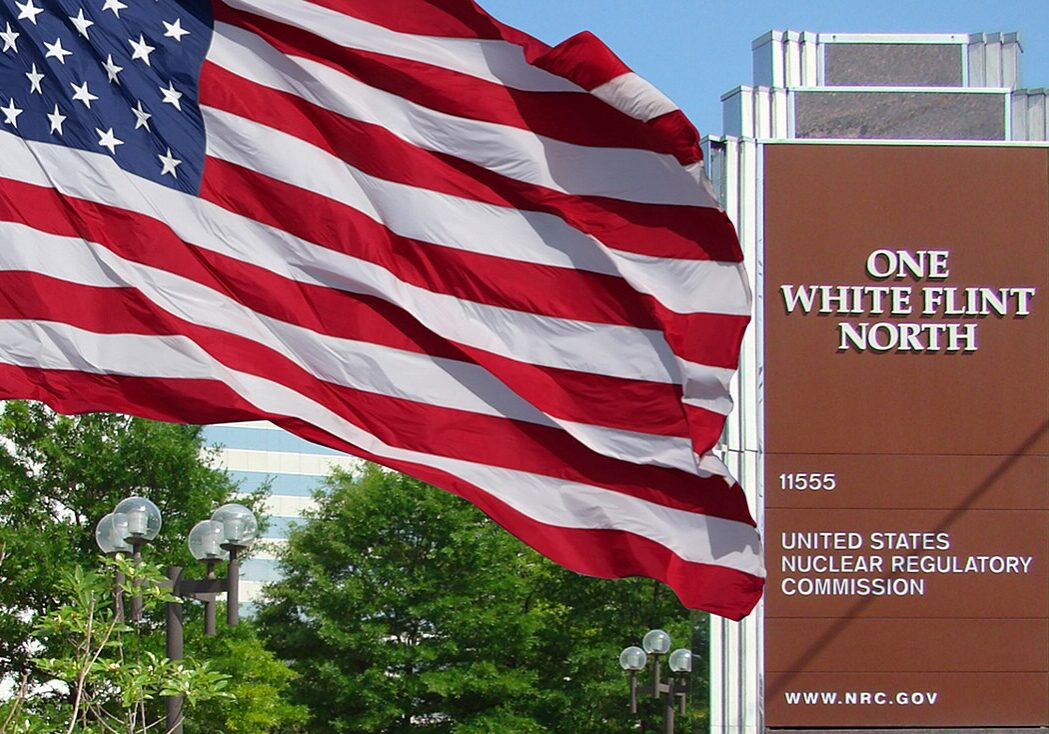
On May 4, 2026, Beyond Nuclear and Nuclear Information Resource Service, et al, filed public comments strongly opposing the US Nuclear Regulatory Commission’s (NRC) Notice of Proposed Rulemaking “NRC Reviews of Reactor Designs Previously Authorized by U.S. Department of Energy (DOE)or Department of War” issued on April 2, 2026.
The NRC proposed rulemaking realigns the federal agency under the authorization of the DOE as the direct result of the Trump Administration’s overtly promotional White House Executive Orders (EO-14300) “Ordering the Reform of the Nuclear Regulatory Commission,” and (EO-14301) “Reforming Nuclear Reactor Testing at the Department of Energy” issued on May 23, 2025. EO-14300 expedites a wholesale rewrite of NRC regulations for licensing and oversight depicting a safety focus as “overly burdensome.” The Trump Administration’s stated intent is to “unleash” the commercial nuclear power industry’s expansion under the DOE’s nuclear promotion mission (EO-14301).
The proposed rulemaking capitulates even the pretense of the NRC being or becoming an “independent regulatory body” as necessary to oversee nuclear power even though the original intent of Congress’ establishing the Energy Reorganization Act of 1974 was to abolish a promotional Atomic Energy Commission (AEC) and create the NRC in its place. The Act additionally separated and spun off the AEC problematic advocacy role to the Energy Development and Research Administration (ERDA) which evolved into the DOE in 1977.
The NRC new rulemaking essentially reverts the agency back to the AEC by the NRC voluntarily forfeiting its regulatory and safety oversight to instead “facilitate direct leveraging of prior U.S. Department of Energy or Department of War authorizations of demonstration reactors into the NRC’s licensing reviews of commercial reactor facility applications that reference those designs.”
The Presidential Orders and the NRC rulemaking combine to dismantle the statutory firewall between the DOE’s ‘nuclear promotion’ activities and water down the NRC’s stated “reasonable assurance” of safety and “adequate protection” obligation. Congress deliberately stripped the AEC of its advocacy, research, testing and development of commercial nuclear power technology to ward off influence pedaling and corruption by legally, functionally and culturally separating it from the NRC’s central role to oversee and enforce public safety and environmental protection to foster and maintain regulatory integrity.
It is alarming in and of itself that the Union of Concerned Scientists according to its comments on the proposed rulemaking points out the NRC is now kowtowing to the Trump Administration’s illegitimate recharacterization of the Department of Defense as the “Department War” in its emerging role in the rewrite and authorize national energy policy even though the statutory name remains the “Department of Defense”.
Beyond Nuclear and Nuclear Information Resource Service’s comments provide insights into how the NRC proposed rule intends to accelerate licensing decisions by charting a new course that is inconsistent and evasive of the letter of the law within the Atomic Energy Act (“AEA”), the Energy Reorganization Act (ERA), the Administrative Procedure Act (“APA”), and the National Environmental Policy Act (“NEPA”), as well as the Constitutional requirement for due process in a democratic society. Nothing in the executive orders cited by NRC in support of the proposed rule can excuse the NRC from the binding requirements of these specific statutes.
The NRC Proposed Rule appears to be a companion to the February 2, 2026 DOE Federal Register notice entitled “Categorical Exclusions for Advanced Reactors” published as “effective immediately” without seeking any review or comments from the states, affected stakeholders or the public. This is a violation of both NEPA and the Administrative Procedures Act. As discussed in the referenced comments filed by NIRS, Beyond Nuclear, and other organizations, the stakeholders have adopted and incorporate by reference the comments on this DOE’s Federal Register notice the pointed comments submitted on March 4, 2026 by the Offices of Attorneys General (OAG) for eleven different states (WA, CA, IL, MD, MA, MN, NM, NY, NV, OR, VT) and the District of Columbia similarly challenging the illegality of the DOE end run around federal law.
The collective OAG comments identify that there is a danger of relying in DOE’s legal interpretation of law and statute in promulgating its Reactor Pilot Program, they state at the outset of their comments, with respect to NEPA, that the DOE must meet its legal obligations to the National Environmental Policy Act (NEPA) to provide a rigorous and scientifically bona fide analysis of environmental impacts in promulgating a categorical exclusion that would seek to exempt advanced nuclear reactors from environmental review.
The OAGs further state, “The [DOE] Notice and the Written Record of Support (Supporting Documentation) do not provide the meaningful environmental analysis that NEPA and DOE regulations require to find that the development of advanced nuclear reactors ‘do not normally have a significant effect on the human environment.’”
The OAGs opening comments continue, “The Notice and Supporting Documentation fail to fully address multiple potential impacts and fail to address certain impacts at all, including the cumulative impact of this expansion of nuclear power generation. DOE must provide additional analysis to assess whether there could be significant impacts from an advanced nuclear reactor developed under this CE. DOE also exceeds its statutory authority in proposing to apply the CE to ‘power production and industrial applications’ because authority over those types of facilities rests with the Nuclear Regulatory Commission, not DOE. Finally, DOE’s rulemaking process is unlawful and arbitrary and capricious by reaching a predetermined outcome before receiving andreviewing public comments.’”
“The NRC has regulatory and licensing control for commercial or industrial reactors, including reactors operated for demonstrating commercial viability, while DOE has authority over research and development reactors on DOE property or under DOE’s control.”
The OAGs find that while the DOE has developed a new categorical exclusion to exempt the development and deployment of advanced nuclear reactors from the environmental review process under NEPA, they do not provide the meaningful environmental analysis that NEPA and DOE regulations require to find that the development of advanced nuclear reactors “do not normally have a significant effect on the human environment.”
It is our concern that the NRC proposed rule would realign the federal regulatory agency’s mandate to comport with the legal standards of “reasonable assurance” and “adequate protection” under the Atomic Energy Act of 1954 as amended with the DOE’s new and reckless categorical exemption from the NEPA environmental reviews that are otherwise required by federal law current for the eleven designs and others anticipated to be added to the DOE Pilot Reactor Project for Advanced Reactors.
In the commenters’ view, the NRC and the DOE actions seek to hastily and illegitimately accelerate the federal regulatory processes for nuclear reactor design certification, environmental qualification, reactor siting, permitting, licensing, and deployment of “advanced” nuclear technologies (small modular nuclear reactors, microreactors, and non-light water reactors, as well as the proposed continuation of the new build of gigawatt-sized commercial light water reactor units) by abdicating the NRC’s statutory duty to protect the public health and safety and national security by regulating and licensing commercial nuclear reactors and other utilization facilities. As egregious, the DOE has rationalized its actions by relying on previous experience of the agencies and their findings that are now being instructed by a promotional bias that strays further away from AEA’s instructive commitment to the standards of “reasonable assurance” and “adequate protection” of public safety and the environment.
For at least these reasons, NRC’s proposed “rubberstamp rule” is ill-advised and contrary to law, and we respectfully request that NRC abandon this policy, withdraw the Proposed Rule, and adhere to the plain requirements of the agency’s governing statutes—the Atomic Energy Act and the Energy Reorganization Act—to protect public health and safety and national security as the regulator of civilian nuclear power plants.
Therefore, the NRC Proposed Rule must be withdrawn.
Support Beyond Nuclear
Help to ensure a safer, greener and more just world for all