“No Kings” / “No Nukes” Sat. 03/28/2026
PROTEST! MARCH 28, 2026 IS “NO KINGS DAY” and “NO NUKES” DAY
47 th COMMEMORATION OF THE THREE MILE ISLAND DISASTER
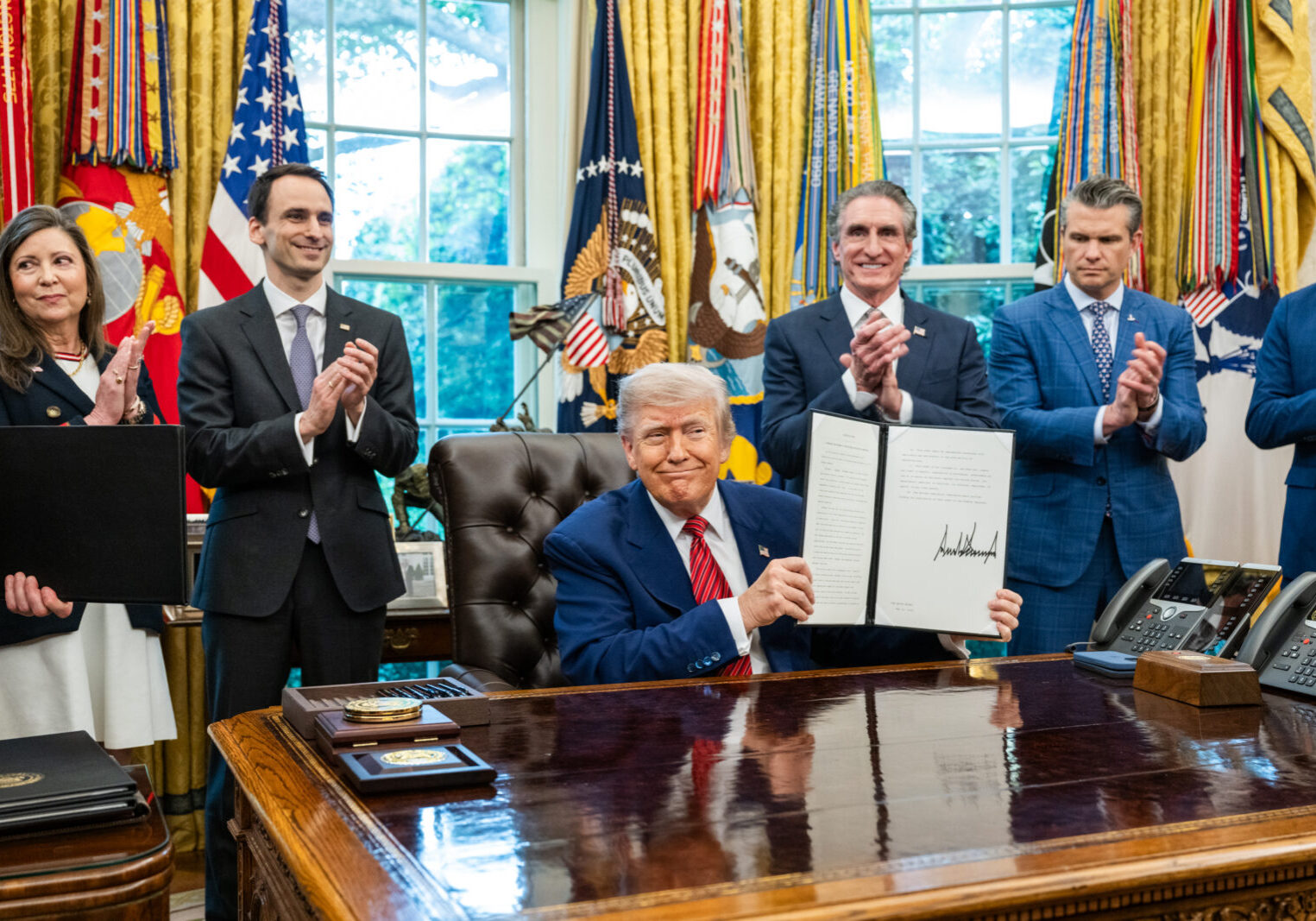
The Trump Administration, by decree, is poised to “unleash” a prohibitively expensive, dangerous and expanded nuclear power empire to speed up licensing, construction and deployment by drastically cutting federal safety regulations, security and licensing oversight.
NO TO “MAKE NUCLEAR DISASTER MORE LIKELY AGAIN”
This year, the Clamshell Alliance celebrates 50 years since its “Declaration of Nuclear Resistance” on July 4, 1976. (As amended in 1977)
Collectively, the anti-nuclear movement is calling upon activists to protest on March 28, 2026 at your closest “No Kings Day” assembly on the 47th commemoration of the Three Mile Island nuclear disaster and the White House efforts to revive a precarious, dangerous and uneconomical nuclear power industry.
By a set of White House executive orders, President Trump has engaged in the wholesale deregulation of nuclear power and unleashing its threats to a sustainable energy economy, public safety, national security and environmental protection. Bring this message to your gatherings across America: “Remember Three Mile Island,” its accidental release of sickening radiation, sparking mass spontaneous evacuations and attempted coverup of the March 28, 1979 partial reactor core meltdown in Pennsylvania. The nuclear accident sent a warning across the US and around the world of the radioactive consequences from expanding nuclear energy. To this day, significant contamination and radioactive waste remains in the permanently closed Unit 1 reactor and Unit 2 ‘s wreckage sited on a sandbar in the middle of the Susquehanna River.
Remeber the TMI nuclear accident
In the early morning hours of March 28, 1979, the Three Mile Island Unit 2 nuclear power plant had been commercially operational for only 90 days near Harrisburg, Pennsylvania. What followed turned a $700 million operating nuclear power plant into a $3 billion radioactive liability for decades still to come.
At 4:00 AM ET, either a mechanical or electrical failure of Unit 2’s main feedwater pumps prevented the vital flow of water to the reactor’s steam generators essential in removing heat from the reactor core. The turbine-generators and the reactor automatically shut down (SCRAM). Immediately, the pressure in the primary coolant system loop that sends super heated water (600 degrees F at 2000 psi) from the reactor vessel to the secondary steam loop in the steam generators began to increase. In order to control the extreme pressure on the primary loop, the pilot-operated relief valve at the top of the reactor pressurizer opened. The valve, by design, was supposed to close with the reduction of pressure, but stuck open instead. Inside the control room, faulty instruments indicated to operators that the valve had closed. The operators were unaware that reactor core cooling water in the form of high-pressure super-heated steam was screaming out of the stuck-open valve. Despite control room alarms and warning lights, the operators did not realize that the reactor was experiencing a very dangerous loss-of-coolant accident (LOCA). Other faulty control room instruments mislead operators to believe that there was enough cooling water covering the reactor core prompting them to take a series of operator actions that mistakenly uncovered Unit 2’s fissioning reactor core causing nuclear fuel damage. Throughout the day, they worked to understand the crisis, with high-pressure injection efforts and eventually restarting a coolant pump around 7:50 p.m. to partially restore core cooling.
The long harrowing days that followed were spent with the operators struggling to manage the buildup of radioactivity, explosive gases, and stabilize the reactor core for long term cooling.
Radiological monitoring equipment at the Three Mile Island Unit 2 (TMI) reactor, including utility monitors associated with the containment off gas venting system went off-scale, exceeding the maximum detection range during the accident, particularly within the reactor’s auxiliary building which handled the reactor’s off-gas venting system. Strategically stationed offsite radiation monitoring systems were non-existent. A severe nuclear power accident was still not considered a “credible” event by federal and state emergency planning agencies.
There was a massive buildup of an explosive hydrogen gas “bubble” developing inside the upper portion of the reactor vessel above the damaged nuclear fuel and the reactor pressurizer. The hydrogen gas was generated by the chemical reaction of the overheated and melting zirconium cladding that encased the uranium fuel pellets interacting with the superheated steam. The hydrogen gas presented a critical threat of finding a spark that would result in a tremendous explosion (as repeatedly seen during Japan’s Fukushima Daiichi nuclear catastrophe in 2011) further damaging the reactor core, rupturing the concrete containment structure and dispersing radioactive fallout on the weather downwind and downstream. To date, the US government and its nuclear related oversight agencies (Nuclear Regulatory Commission and the Department of Energy) deny that the massive hydrogen bubble detonated, but assert it burned off inside containment instead. This is contradicted by experts, including Arnie Gundersen who has served as an expert witness in numerous formal proceedings including before federal Judge Sylvia Rambo in support of claims of the damage and health consequences suffered by the downwind community to the TMI accident. Listen to Gundersen’s full account of the TMI hydrogen gas detonation and early radioactive release from the reactor containment structure here.
The surrounding population experienced a massive spontaneous evacuation. An estimated 140,000 to over 200,000 Pennsylvania residents spontaneously evacuated their homes and livelihoods following the nuclear accident. While the Governor Richard Thornbegy advised that only pregnant women and pre-school children within a 5-mile radius to leave (an estimated population of 5,000), the voluntary public response sparked a mass exodus, including the spontaneous evacuation of hospital emergency rooms of doctors, nurses and technicians out to a radius of 25 miles (also identified as the “shadow evacuation effect”).
A battle of TMI cancer studies
The dominant message delivered to the general public over the decades since the nuclear accident by mainstream media, industry spokespeople and academic studies has been a resounding “nobody died from radiation exposure as a result of the Three Mile Island nuclear accident.” As National Public Radio’s Weekend Edition reported on it’s 30th commemoration (2003) of the TMI health impacts, “not so much as a sprained ankle.” For the sake of introducing an iota of balance and environmental justice, Beyond Nuclear takes this opportunity on the 47th commemoration of the nuclear accident to represent the epidemiological work of Dr. Steven Wing, an epidemiologist and associate professor at the University of North Carolina at Chapel Hill’s Gillings School of Global Public Health (see his presentation at a previous TMI conference video part 4 and part 5).
Dr. Wing was asked to review the findings of one of the most authoritative academic studies of cancer incidence (1991) within a ten-mile radius of TMI conducted by Columbia University School of Public Health. The study “Cancer Rates after the Three Mile Island Nuclear Accident and Proximity of Residence to the Plant” found no conclusive link between the officially off-scale TMI radiation releases that occurred in 1979 and a rise in cancer incidence. The conclusion was made despite an observed 64% rise in cancer rates peaking in 1982 (see Figure 1) between the study period of 1975–1979 (pre-accident) and 1981–1985 (post-accident). The Columbia study attributed the increase in cancer rates near the stricken reactor to “not obvious” factors (cigarette smoking, the population’s lower socio-economic status, increased surveillance, stress, etc.). Still, people suffered from cancer despite no “obvious” causes and many still die. According to best science, recognized as the Linear No Threshold (LNT) dose-response model, ionizing radiation exposure at any level is clinically corrolated as “carcenogenic,” “mutagenic,” “terotegenic” and an associated increase in biological risk.
Dr. Wing’s University of North Carolina study, “A reevaluation of cancer incidence near the Three Mile Island nuclear plant: the collision of evidence and assumptions” (Jan. 1997), identified the Columbia study with “logical and methodological problems in earlier reports that led us to reconsider data previously collected.” The Wing study findings comparatively conclude that Wing’s “Results support the hypothesis that radiation doses are related to increased cancer incidence around TMI. The analysis avoids medical detection bias, but suffers from inaccurate dose classification; therefore, results may underestimate the magnitude of the association between radiation and cancer incidence.”
Take advantage of March 28th “No Kings” Day
Join the call and acknowledge that Trump’s Decrees to unleash nuclear will only “Make Nuclear Disasters More Likely Again.”
- Trump Order tells NRC to sunset the “Aircraft Impact Assessment Rule” and eliminate rule that new reactors be designed against intentional aircraft crashes like the 911 attacks. The White House claims that it simply makes new reactor designs more costly and its outdated by the present aircraft crash threat level (Where Are Your TSA Agents?);
- Trump Order to impose “categorical exclusion” of environmental impact assessment for new reactor designs as required under National Environmental Policy Act (NEPA);
- Trump to eliminate Climate Change Assessments on nuclear power plants from sea level rise, increasingly severe storms, hurricanes, atmospheric rivers, floods and wildfires that will only increase nuclear accident risks and accident frequency.
- You name it, he’ll wreck it!
Support Beyond Nuclear
Help to ensure a safer, greener and more just world for all